OVERVIEW
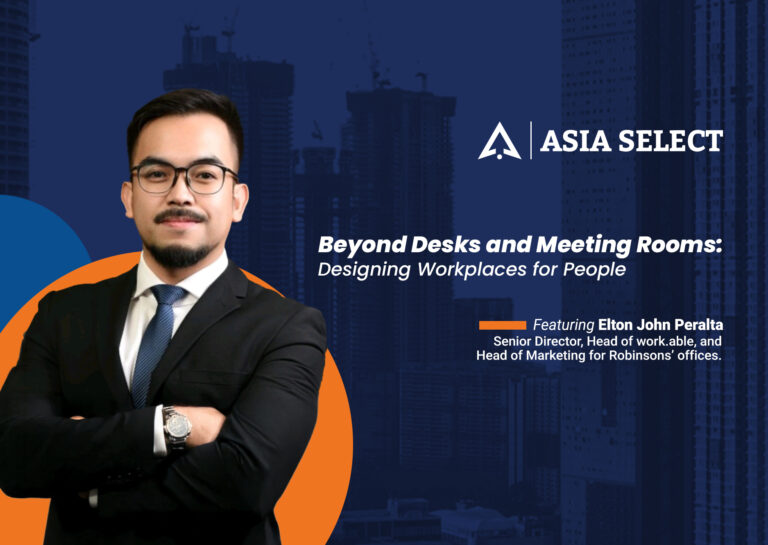
• Hear from Elton John Peralta, Senior Director and Head of Work.Able, on why the future of office spaces begins with understanding people’s needs.
• Explore how culturally grounded design and thoughtful workplace experiences can create comfort, belonging, and a stronger sense of identity.
• Learn how flexible workspace options support collaboration, focused work, privacy, creativity, and different working styles.
• Discover why adaptable, people-centered offices can help organizations prepare for evolving workforce expectations and future ways of working.
Introduction
As workforce expectations evolve, Robinsons Land Corporation and Work.Able shows how human-centered design, flexibility, and meaningful workplace experiences can shape the future of office spaces.
The modern workplace is no longer defined only by desks, meeting rooms, and office walls. As organizations adjust to changing expectations, the spaces where people work now play a greater role in shaping productivity, collaboration, and employee experience.
For Elton John Peralta, Senior Director, Head of Work.Able, and Head of Marketing for Robinsons Land Corporation’s offices, the future of work begins with understanding what people need and creating environments that respond to those needs.
Designing Workspaces Around People
Elton began his real estate career in 2011 and found purpose in the tangible impact of building homes and spaces. Over time, this appreciation for meaningful environments brought him to Robinsons Land Corporation, where he helps deliver quality, accessible, and flexible office spaces through Work.Able.
His journey reflects a broader shift in real estate. The value of an office is no longer measured by its physical features alone. It is also measured by the experiences it creates for the people who use it. It is also measured by the experiences it creates for the people who use it, how it supports their day-to-day needs, and how it adapts to the changing ways people work.
As workplace expectations continue to evolve, flexibility has become an essential part of creating spaces that work for different individuals and organizations. Businesses need environments that can respond to their operational requirements, while employees benefit from spaces designed with comfort, accessibility, and productivity in mind. This makes understanding people and their needs just as important as understanding the spaces themselves.
For Elton, this shift highlights the importance of looking beyond the traditional concept of an office. A well-designed workplace should do more than provide a place to work. It should create opportunities for connection, encourage collaboration, and give people the flexibility to work in ways that allow them to perform at their best.
Through Work.Able, this people-centered approach reinforces the idea that the future of real estate lies not only in the spaces we build, but also in the value those spaces bring to the people and businesses they serve. As the nature of work continues to change, the ability to listen, adapt, and design with people in mind will remain essential to creating workplaces that stand the test of time.
Redefining Premium Through Experience
A premium office experience does not always have to come with a premium price. For Elton, what sets a workspace apart is not simply how it looks, but how it makes people feel.
At Work.Able, design serves as a way to create comfort, connection, and a sense of belonging. Modern Filipino elements, including solihiya patterns, rattan, and Vigan tiles, bring a touch of local identity into contemporary workspaces. These thoughtful details give each space its own character while creating an atmosphere that feels welcoming, familiar, and distinctly Filipino.
Beyond aesthetics, the approach centers on the experience of the people who use the space. By combining thoughtful design with functionality and accessibility, Work.Able aims to create a “home away from home,” where tenants can feel comfortable, connected, and inspired throughout their workday.
For businesses evaluating their office environments, this offers an important perspective: the value of a workspace extends beyond its location and cost. The atmosphere it creates, the comfort it provides, and the way it supports everyday activities all contribute to the overall workplace experience. Ultimately, a well-designed office is one that not only meets business needs but also makes people feel that they belong.
Designing for a Multigenerational Workforce
As different generations shape today’s workforce, workplace design must respond to a wider range of preferences, working styles, and expectations.
Elton highlights the growing presence of Millennials and Generation Z as a key consideration in developing Work.Able spaces. While collaboration remains essential, employees also need environments that support individual focus, creativity, and personal expression.
Work.Able addresses these needs through a variety of workspace options. Town halls, hot-desking arrangements, and meeting pods encourage collaboration and interaction. Focus pods, phone booths, and smaller creative spaces provide room for concentrated work, private conversations, and individual activities.
The design also recognizes the value of visually appealing and social media-friendly spaces, particularly for younger professionals. However, the goal is not simply to create an office that looks good. A well-designed workplace should give people the freedom to choose the environment that best supports the task at hand.
For organizations, this reinforces the importance of recognizing employees as individuals with different needs and working preferences. But how can businesses translate these insights into workplace environments that support both productivity and employee experience?
Interview Transcript
In this interview, Elton John Peralta, Senior Director, Head of Work.Able, and Head of Marketing for Robinsons Land Corporation’s offices, shares his perspective on the evolving workplace, the importance of human-centered design, and why flexibility remains essential in preparing for the future of work.
1. How did you start your career and lead the way to where you are now with Robinsons Land Corporation?
I started my career in 2011. I already started with a real estate company and, from there, I kind of liked how, you know, building homes, building spaces actually create tangible progress.
So from there, I never looked back. And you know, 16 years after, I’m here. I found my way to Robinsons Land. And you know, creating more value by providing quality and accessible, flexible office spaces through Work.Able.
2. You’ve won awards for “human-centered” design that balances productivity, creativity, and cultural identity. How do you leverage these recognitions in marketing to justify premium positioning and attract tenants who value experience over lowest cost?
So “premium”, as I said, doesn’t always have to be expensive. “Premium” can also come in terms of customer experience. As they come in to our centers, they see a lot of, you know, beautiful, fit-out designs. They see a lot of modern Filipino textures. We have Solohiya patterns, we have rattan, we have Vigan tiles even, at least for this floor.
And, you know, it gives the customer a really pleasant feeling. A feeling that they won’t see anywhere else. Again, it doesn’t have to be expensive. It just has to feel, you know, it just has to give a certain feeling or emotion for our tenants. That, they’re kind of like at home. Like providing that “home away from home” experience
3. You’ve highlighted social media-friendly, “OOTD-ready” spaces to appeal to younger workers. How do you balance aesthetic/experience design with productivity outcomes so that these preferences translate into higher utilization and longer member lifetimes?
So when we build spaces, we actually take into heart what our customers need. And off hand, you know, Gen-Zs make up about 20% of the population of the workforce. Millennials make 50%, right? So that’s about 70% all together of the workforce.
That’s why when we create spaces like this, it’s always attuned to their requirements. We always balance. You know, millennials can get a little bit more collaborative than the rest of the generations. So we have to have collaborative spaces like a town hall, we have hot desking, we have meeting pods that do not restrain them in the four walls of the room.
While Gen-Zs on the other hand, they kind of want their own creative space. So we also have “Focus Pods”, as we call it. We also have phone booths, we also have very nice, little niches where we have artworks. You can do your photoshoots; you can do your OOTD.
So, it’s really a matter of providing spaces for every sort of requirement. Whether it’s for quiet work or a collaborative output.
4. Looking ahead in 5 years from now, which emerging workforce preference (e.g., near-home hubs, team-offsite days, AI-enabled spaces) do you see as the next big lever for turning tenant needs into a structural advantage for RLC’s office portfolio?
In the next five years, of course, there’s definitely going to be a lot of variables that’s going to be at play, right? A lot of geopolitical economics, technology in digital variables that’s going to come into play. But for us at Robinsons Land and for Work.Able, it’s always having to be prepared and it’s always being flexible.
And, you know, that’s at the very crooks of who we are at Work.Able. You know, creating flexible spaces so that whatever trend there might be, whatever kind of requirement that arises in the future, we will be more than ready to support that.
And again, flexibility is the name of the game. And Work.Able is here to support it.
Conclusion
Elton’s perspective underscores a broader principle shaping the future of work: successful workplaces begin with an understanding of the people who use them.
Through thoughtful design, culturally grounded experiences, and flexible workspace solutions, Work.Able shows how office environments can move beyond their traditional function and become places that support different ways of working.
As the world of work continues to change, staying informed matters. Explore our Hiring Advice page for expert perspectives on recruitment, workforce trends, and building resilient teams in the Philippines.